Seattle Doesn’t Host Supercross. It Auditions It.
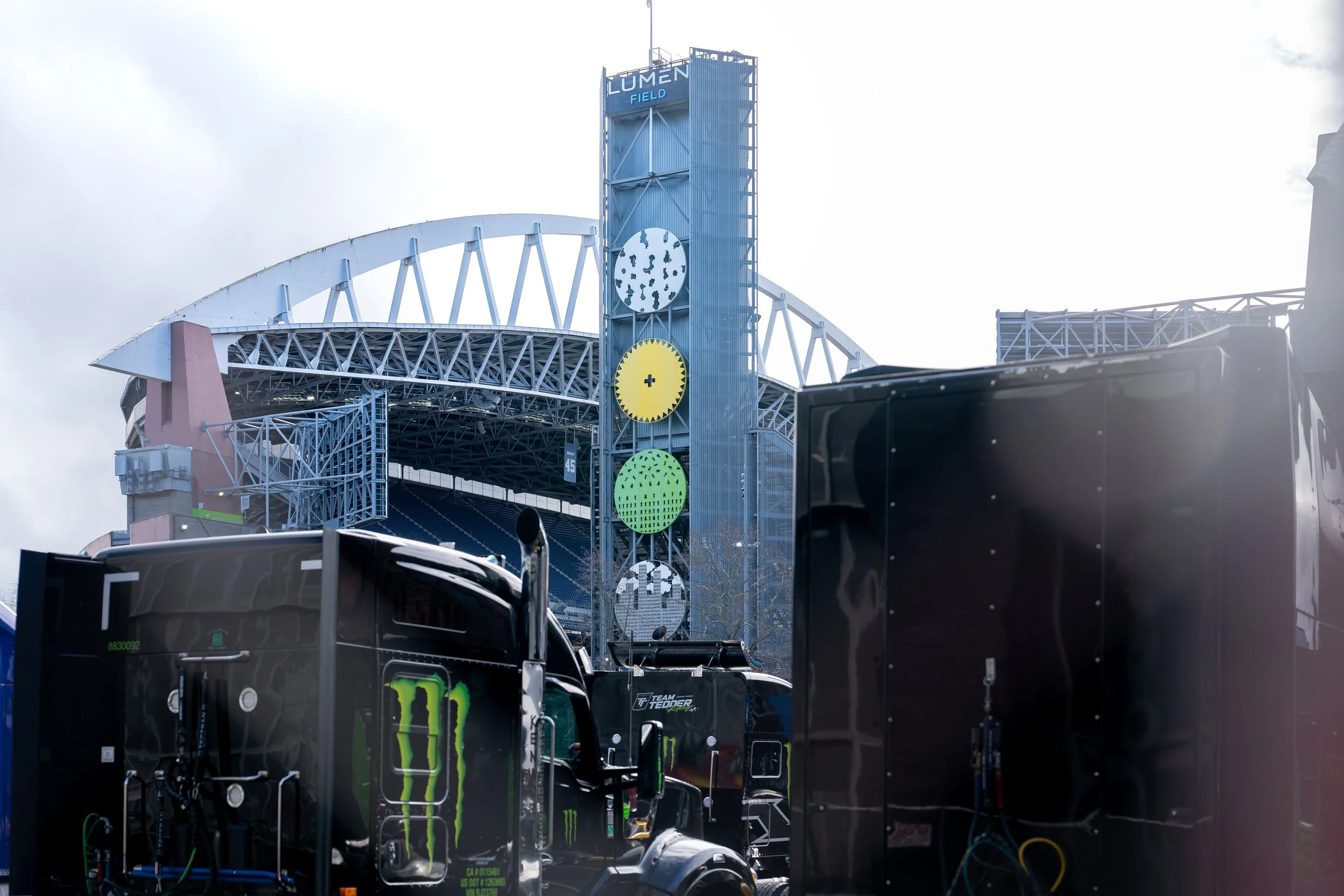
SEATTLE — Before engines fired inside Lumen Field, the message outside was already clear: this wasn’t just another tour stop.
It was a proving ground.
Under a slate-gray Pacific Northwest sky, the stadium’s steel arches framed a steady current of fans flowing through Pioneer Square. No tailgate chaos. No manufactured spectacle. Just committed followers — layered for the cold, debating championship math before the first heat race even lined up.
By the time the Monster Energy AMA Supercross series reaches Seattle — traditionally positioned in the back half of its 17-round championship — the margins are no longer theoretical. Points gaps tighten. Title contenders are often separated by single digits. Every qualifying lap matters because it determines gate selection. Every heat race becomes risk management. And by the time the 450SX main event rolls to the line — 20 minutes plus one lap — the night has already tested more than just speed.
Lumen Field adds its own variable to the equation. Unlike fully enclosed domes that control climate and moisture, Seattle’s open-air design introduces subtle unpredictability. Air temperature and humidity can influence how the dirt packs and breaks down. Historically, Seattle tracks evolve quickly, carving deep ruts that punish over-aggression and reward riders who balance throttle control with patience. By the final laps of the main, line choice becomes survival.
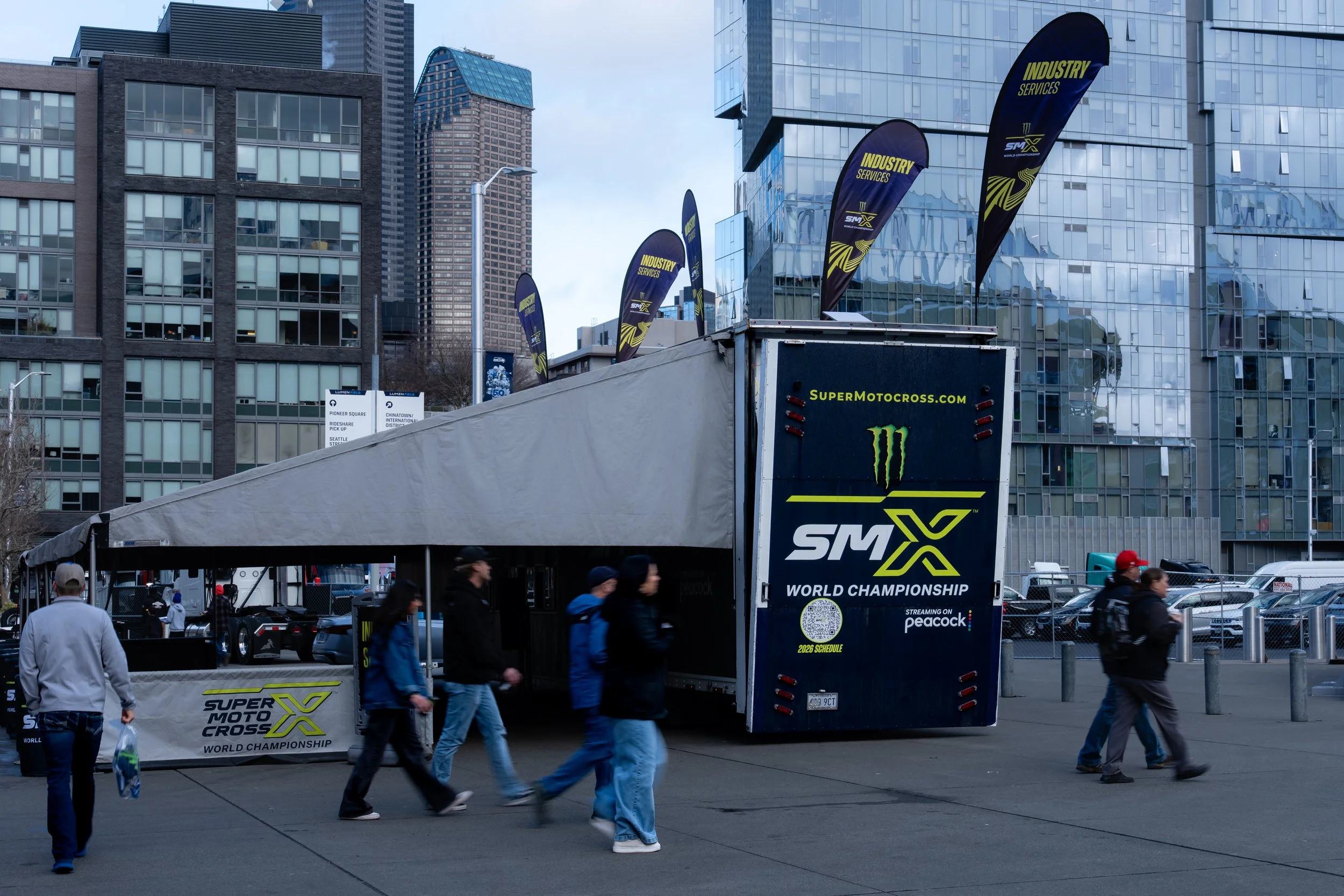
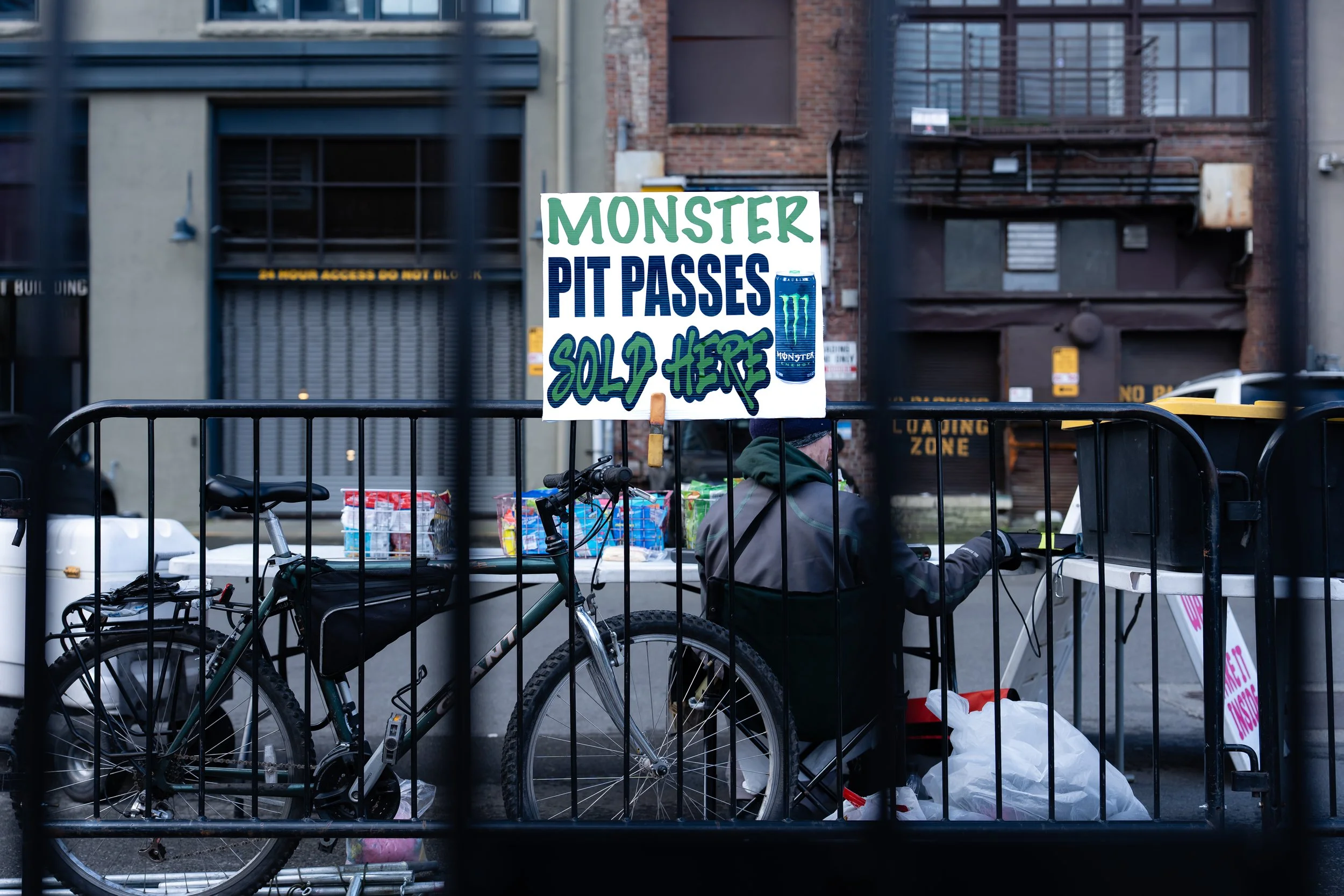
Outside the venue, the scale of the event was visible in layers. Factory transport rigs lined the perimeter streets — rolling command centers carrying multi-million-dollar race programs. Branded semis idled beneath the stadium’s steel frame, a reminder that Supercross is both sport and industry. Just beyond them, independent vendors operated behind temporary barricades, selling pit passes and merchandise to fans who understand the access matters as much as the racing itself.
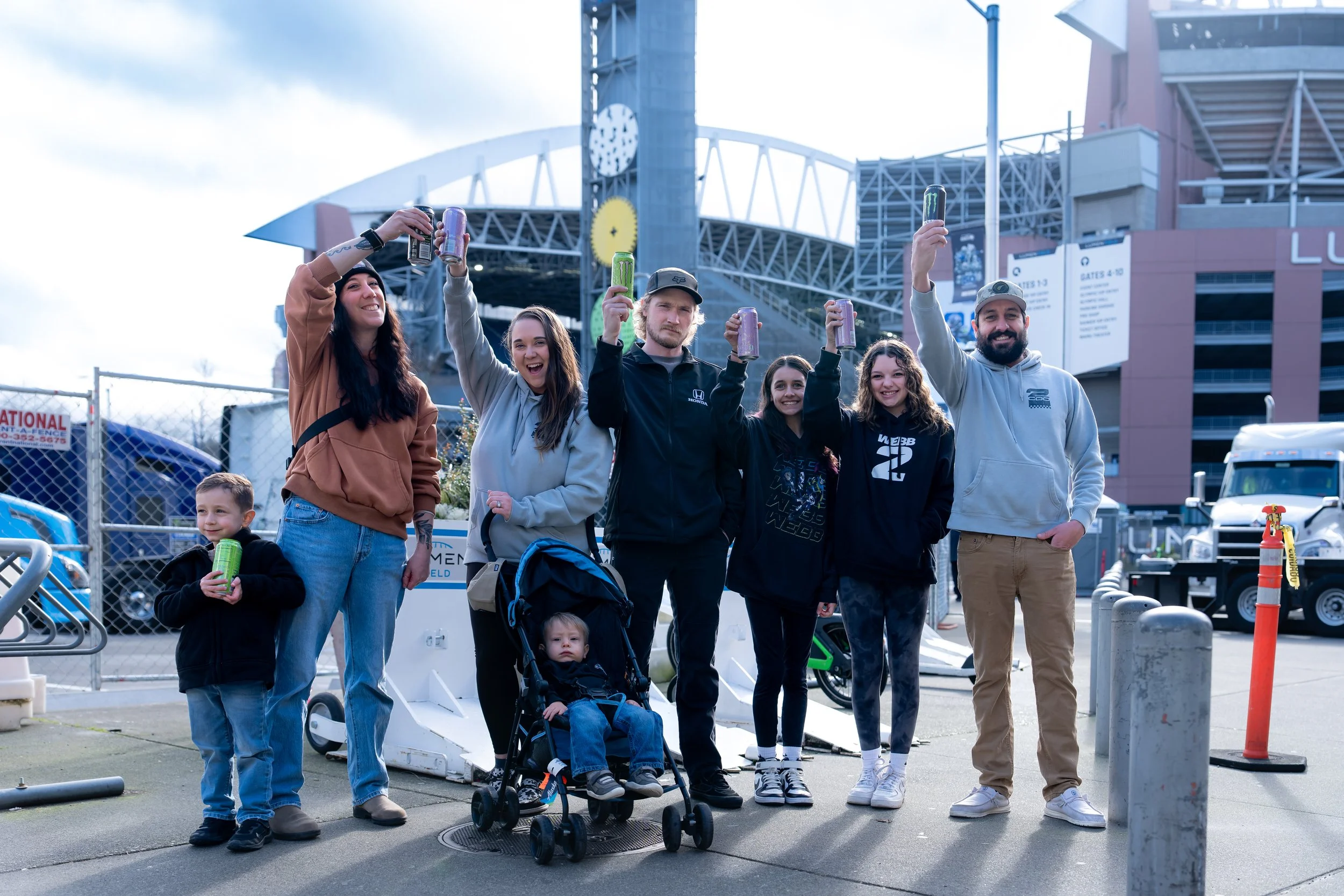
This is what a healthy motorsports market looks like — corporate infrastructure and grassroots energy sharing the same block.
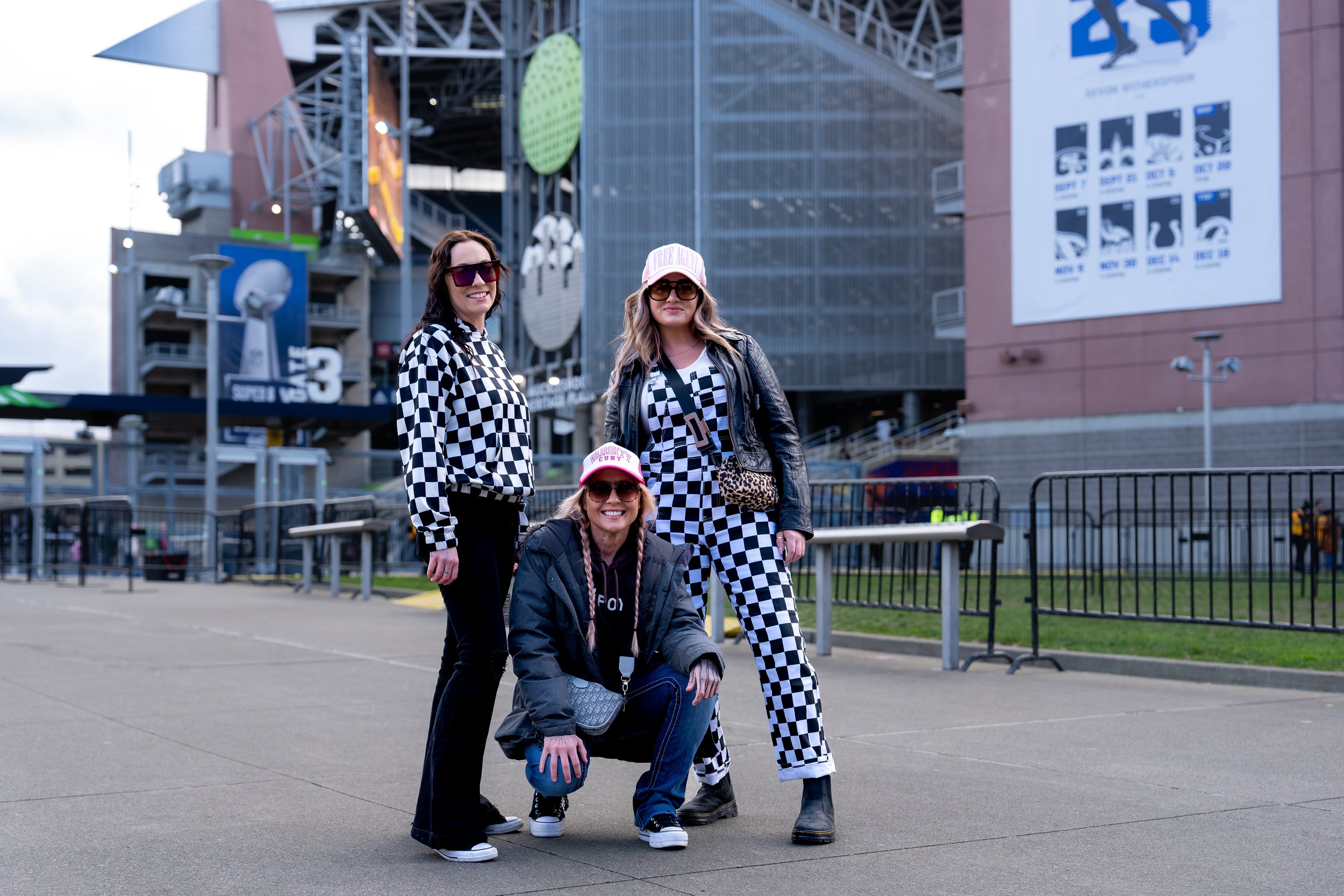
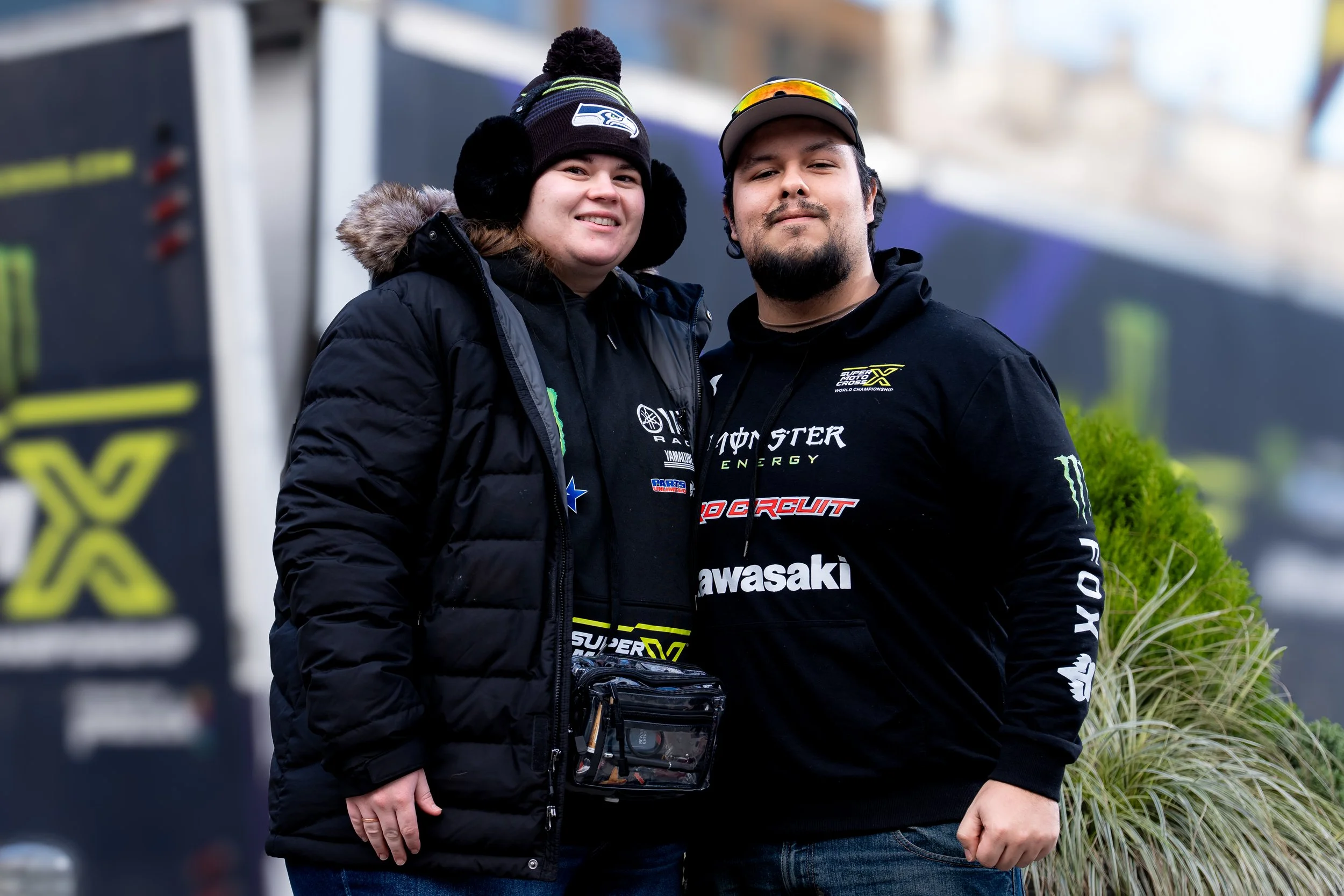
And the crowd reflected that duality. You saw multi-generational attendance: parents who grew up watching the sport’s 1990s boom now guiding kids toward the gates in current championship gear. You saw fans in checkered race-day outfits treating the night like ritual, not novelty. Conversations weren’t about whether riders could clear the triple — they were about who could manage the whoops when the track cupped out, who could limit mistakes when fatigue set in, and how this round might alter the red-plate picture.
Seattle doesn’t draw casual spectators. It draws educated ones.
Inside the program, the format leaves no margin for complacency. Afternoon qualifying sets the order. Two 450SX heat races transfer only nine riders each directly into the main. The Last Chance Qualifier offers a narrow final doorway. By the time the gate drops on the main event, more riders have felt pressure than most casual viewers realize. A poor start in Seattle isn’t just inconvenient — it’s magnified by a track that tightens as the night progresses.
And that’s what makes this stop resonate beyond the Pacific Northwest.
Seattle has a history of influencing championship trajectories. Midseason rounds here have produced surprise podiums, momentum swings and, in certain years, dramatic reshuffles in the standings. With fewer rounds remaining after this point on the calendar, the arithmetic changes. Riders protecting points must decide when to attack. Riders chasing the title must measure risk against opportunity. The dirt doesn’t care which strategy they choose.
By the time stadium lights cut through the dusk and the opening ceremonies concluded, the tone had already been established outside the gates. The crowd energy wasn’t frantic — it was expectant. This wasn’t a spectacle designed for casual applause. It was a technical examination disguised as Saturday-night entertainment.
The Supercross calendar doesn’t hand out momentum.
Seattle forces riders to earn it.
And long after the transporters pull away from Lumen Field and the series moves east, the implications of this stop tend to travel with it.